Real leadership stories
The Digital
Colleague
AI steps up as a radiology teammate

-
WORDS
ByMany -
PHOTOS
Mia Mala McDonald -
DATE
23rd Feb

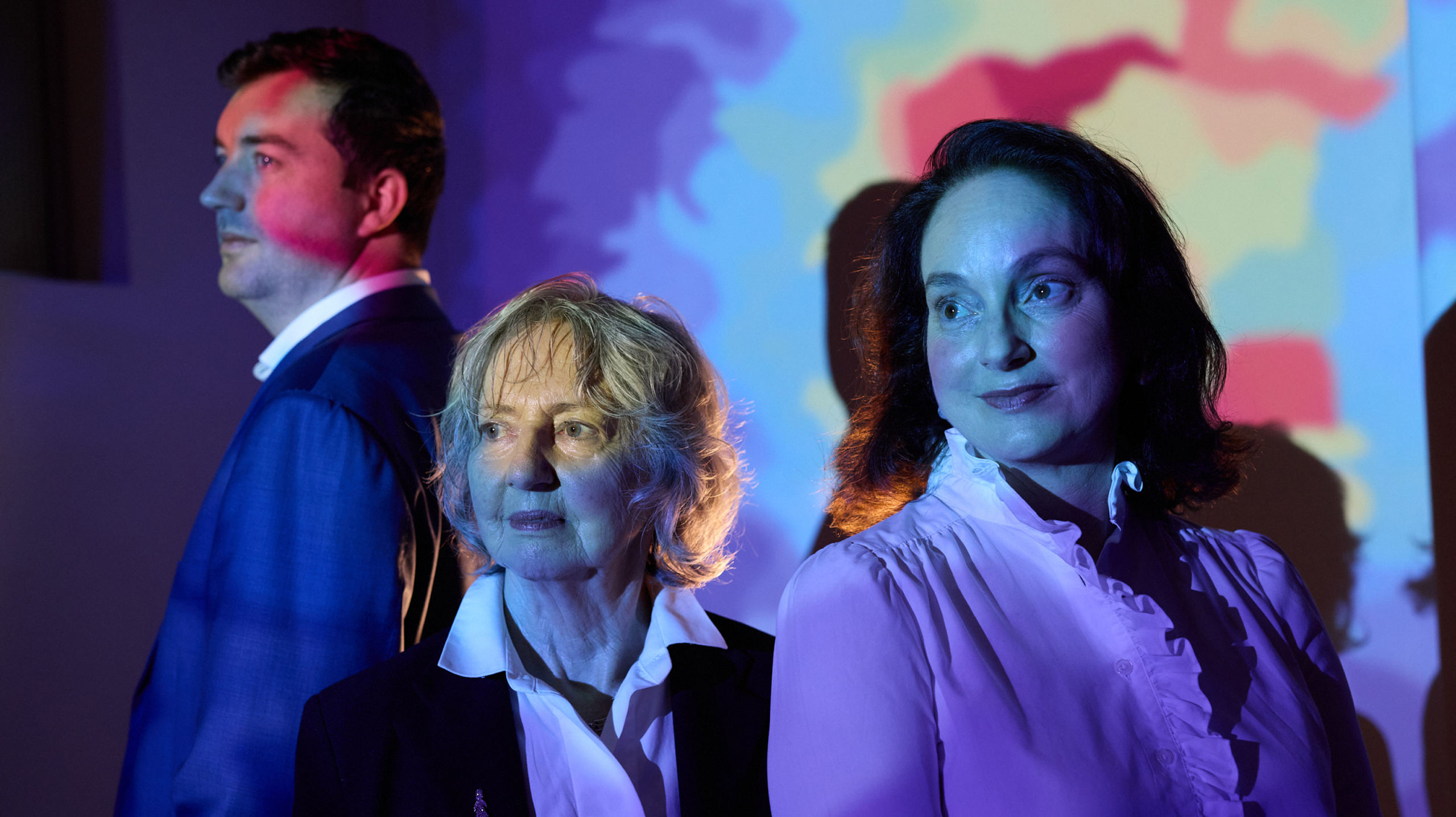
In the rapidly evolving landscape of healthcare, a multidisciplinary team is charting new territory. Their mission: revolutionise breast cancer screening with artificial intelligence as a teammate. But as Helen, Clinical Director of St Vincent’s BreastScreen and the project’s pioneer, reveals, the real story goes far beyond the technology and into how teams navigate complexity when the rulebook hasn’t been written yet.
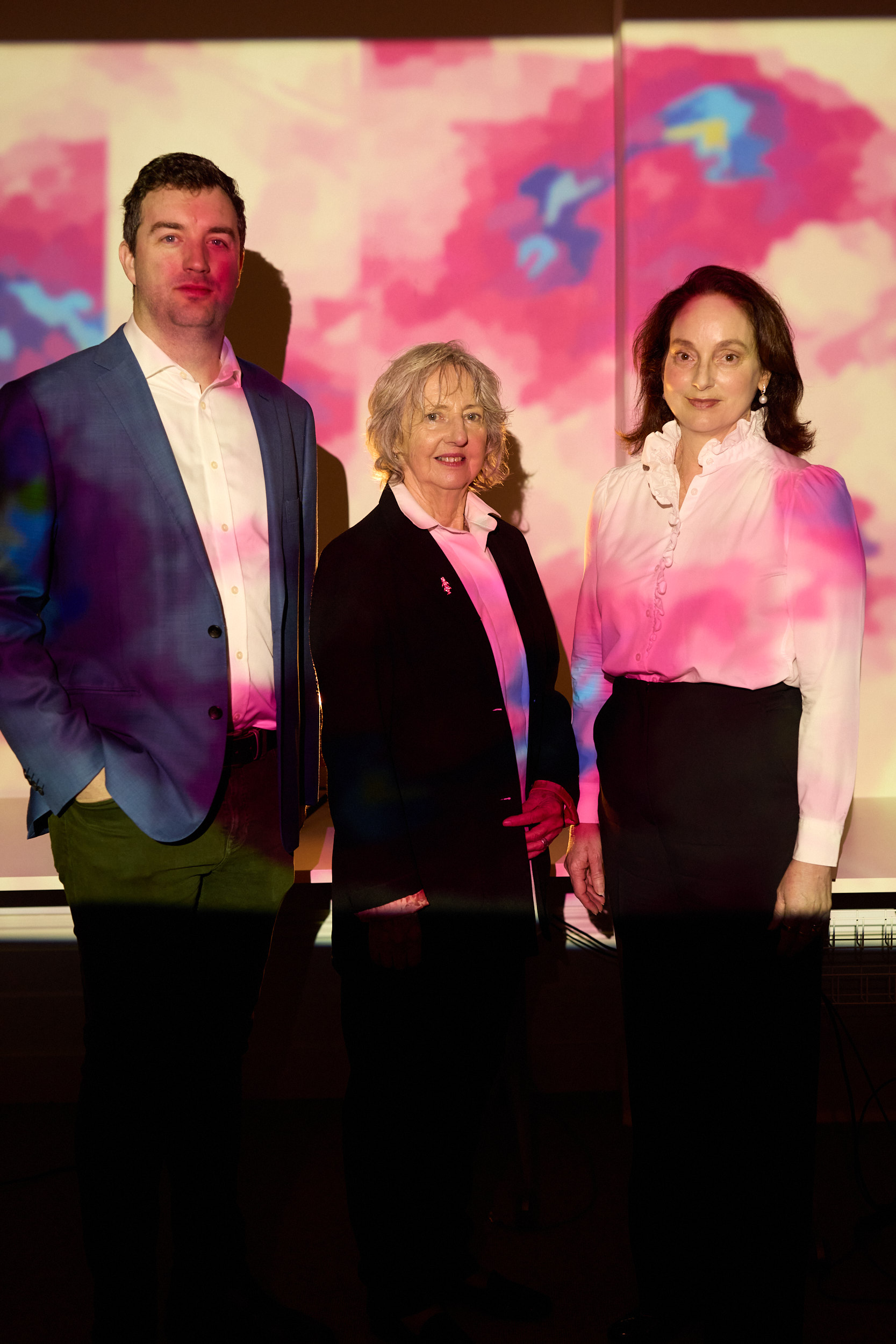
Innovation journeys in health are rarely short or quick. On the day ByMany meets the team, Frazer, who has worked in medical imaging for three decades, tells us that she first became inspired by the possibilities of automating breast cancer screenings more than 20 years ago while working in the United States. ‘It’s only recently that we are finally seeing the longitudinal datasets and computing power we need become readily available.’ Gerda Evans, who joins us as a patient advocate, was diagnosed with breast cancer in 1989 and has been working in the community ever since. Both also speak with deep fondness and respect for John Hopper from the University of Melbourne, who sadly passed in 2024 but was a key team member and is remembered as a scientist passionate about the evidence, always willing to challenge preconceived ideas and let the data tell the story. We are joined by Katrina Kunicki, who brings both an understanding of radiology and an infectious startup business mindset, as well as energetic AI and data specialists Carlos Peña-Solorzano, Michael Elliott, and Davis McCarthy, all from the St Vincent’s Institute of Medical Research.
What emerges from our conversation is a portrait of collective achievement in action. Rather than a lone genius or individual breakthrough, there is evidence of diverse expertise—from radiography to business strategy, from clinical practice to AI development—combining to tackle one of healthcare’s most pressing challenges. The team’s approach reflects a deeper truth about innovation: when facing truly complex problems, no single perspective suffices. The radiographer-turned-MBA, the clinical leader with technological optimism, the data scientists seeking domain expertise – each brings essential pieces to the puzzle. And the full picture they are trying to put together: to save more lives with better accuracy, and faster, more efficient breast cancer detection for all women.
The challenge is a sobering one, centred around a disease with which many of us are likely to have a connection. Breast cancer is the most common cancer diagnosed in Australian women and the second leading cause of cancer death. The great hope, however, lies in the likelihood that if medical professionals can catch it early in the breast, before it spreads to lymph nodes or distant organs, the chances of a cure are very high. Early detection is vital, but current screening is a ‘one-size-fits-all approach’ with inaccuracies, growing demand, and reliance on highly trained humans. Radiology staff currently use a process called batch reporting, where they often read 150 mammograms in 150 minutes, expertly looking for small, subtle changes and signs of early cancer. Ninety-five per cent of those are normal, so a highly trained expert is sitting there marking images as normal, normal, normal, with the occasional evidence of cancer being flagged. Uniquely, to improve accuracy in breast cancer screening, there are always two radiologists reviewing each mammogram, and if they differ in their assessment, it goes through to a third. It is therefore always ‘diagnostics as a team’.
The hypothesis is that AI can join this team, providing at least some layer of screening and detection more quickly and affordably. Michael builds on this, making a strong case for AI to be part of the process, particularly in the initial screening rounds. ‘Often, the discussion is around AI taking more of the menial tasks away from humans. It just happens that in this field, the menial task is still a highly skilled one. But we feel that in the early stages, where perhaps only 1–5% of those images have any risk of breast cancer, AI can perform very well, and as we refine down to the point where 50% of those images are showing cancer risk, and we want human engagement, we can get far more efficient.’
Davis is then quick to point out other benefits of the AI teammate, noting that where humans, constrained by time, are often giving binary readings – ‘detected’ or ‘not detected’ – AI can ‘give a score for each image between 0 and 1. What we are finding is that there is a lot of information in that score, which is a game-changer.’ The team has discovered that the AI score, if below the threshold for cancer, is a better predictor of future cancer risk than any known measures. Helen now envisions a personalised approach to screening based on AI risk scores that can save many lives. ‘We are simulating new screening protocols with AI risk scores where, for example, women in the top 2% of AI risk scores receive a personalised prescription that might include annual screening or use of contrast mammography or MRI.’
The possibilities are very exciting, though Katrina, who is more used to the speed of the startup world, offers a sobering reality check: ‘With services like cancer detection, we must acknowledge the need for an appropriate balance of validation and risk management.’ In healthcare, where patient safety intersects with technological innovation, every step forward requires careful navigation through regulatory frameworks, clinical validation, and organisational change. Of course, behind the algorithms and implementation challenges are real people whose lives could be transformed by earlier, more accurate detection. There is a rush to expedite technology, but a patience to do so in a deeply human way. Cancer survivor and community advocate Gerda is part of the group that supports this fine balance. In teams navigating uncertainty, acknowledging doubts and challenges is as important as maintaining optimism. It’s this juggle—enthusiasm tempered by realism, vision grounded in practical experience—that enables sustainable innovation.
Despite the challenges, or perhaps because of them, the team’s enthusiasm remains undimmed. Helen’s optimism is contagious: ‘I think there’s never been a more exciting time in healthcare. We now have the ability to do incredible things and to really shift the needle and advance the human condition.’ This shared sense of purpose is the team’s North Star, and Katrina echoes this sentiment: ‘That’s what keeps me going and why I came to the project, because I believed in the problems we were trying to solve. When the going gets tough, you’ve got to focus on that.’ ‘We’ve all learned so much,’ Helen continues, ‘even if we were to stop now.’ But stopping isn’t on the agenda. The team’s commitment to continuous learning exemplifies how groups navigate uncharted territory, not through perfect planning, but through iterative discovery over long periods. This learning extends beyond technical knowledge. It encompasses understanding how to implement AI in clinical settings, how to manage change in complex healthcare systems, and how to maintain momentum when progress feels glacial.
Health is going to look very different in the future… I just hope that I’m working on it long enough to actually see all of this become regular clinical practice, or at least that I can sit on a lounge chair on the patio and follow it in some way. Because it’s just all so wonderful.’
As healthcare stands at an inflection point, this team’s experience offers lessons for any group venturing into uncharted territory with a commitment to the long haul. Transformation takes time, especially in complex systems, and the teams that acknowledge this reality while maintaining enthusiasm are better equipped for the journey. It reminds us of the saying ‘Slow is smooth, and smooth is fast.’
Australia finds itself at the forefront of this work, and there is good reason for that to remain the case. Helen warns of the risk of being overly dependent on international companies for these high-consequence decisions at scale in healthcare. ‘If we just rely on technology coming from abroad, we hollow out our own clinical and technical capabilities.’ Davis is also a strong advocate for building this expertise locally and is even bold enough to position Australia in the major leagues globally. ‘For me, it touches on some very old things in Australian culture, this sense of inferiority, that our capabilities are not internationally competitive. It’s like when the artist Nick Cave feels like he needs to go to London to prove his chops as a musician, and then he becomes a global star, and only then is he lauded in Australia. People seemed shocked that we are doing this AI work here, and I’ve been asked, “Isn’t Google doing that? Why do we need to?” I push back on this implication of someone else, somewhere else being smarter or better resourced than us. Our best people, doing our best work, are the best of anyone anywhere.’ It’s heady, exciting stuff, and perhaps people like Helen or Davis might also be powerful in Canberra one day, putting their insights and experience as practitioners alongside some of our career politicians.
When navigating without a map, a clear sense of why you’re doing the work becomes essential.
It’s the compass that keeps teams oriented when the path becomes unclear, and it’s why someone like Carlos has decided to not help Anthropic or OpenAI refine its chatbots after graduating from his PhD but instead contribute to something he sees as more impactful and meaningful: ‘We hope to help a lot of people.’ As Helen adds, ‘We’re as enthusiastic as ever.’ This sustained enthusiasm, grounded in purpose and tempered by experience, exemplifies how teams can thrive in uncertainty, learning and adapting as they chart new territories for others to follow.
The meeting’s last words come from Gerda, someone who has experienced the terror of a breast cancer diagnosis in the late 1980s, successful treatment, and then decades of work as a community advocate in the space. ‘For so long, so many women had such different experiences across Australia, some great, some not so good. Year after year, I’ve gone to these breast screening conferences where we all come together, and at times, the progress has just felt so slow, and that’s been really frustrating. But even in the last two years, we’ve noticed huge changes, and that is so reassuring. Today, just sitting here listening to all these brilliant researchers talking, and to hear about your experience and your sincerity about doing the best thing possible for all these women, I just want to say thank you. Thank you. Thank you.’